
TITANTube®
Why Choose FTG for TITANTube® Geotextile Dewatering
The fabric makes the difference.
The design comes first.
The only geotextile tube dewatering certification program in the industry.
Technical expertise in Africa.
Key Product Information
- Sizes: Dumpster-scale to 120-foot circumference and larger; custom-fabricated to project specifications
- Primary fabric: OS435 Hi-Flo woven geotextile (polypropylene)
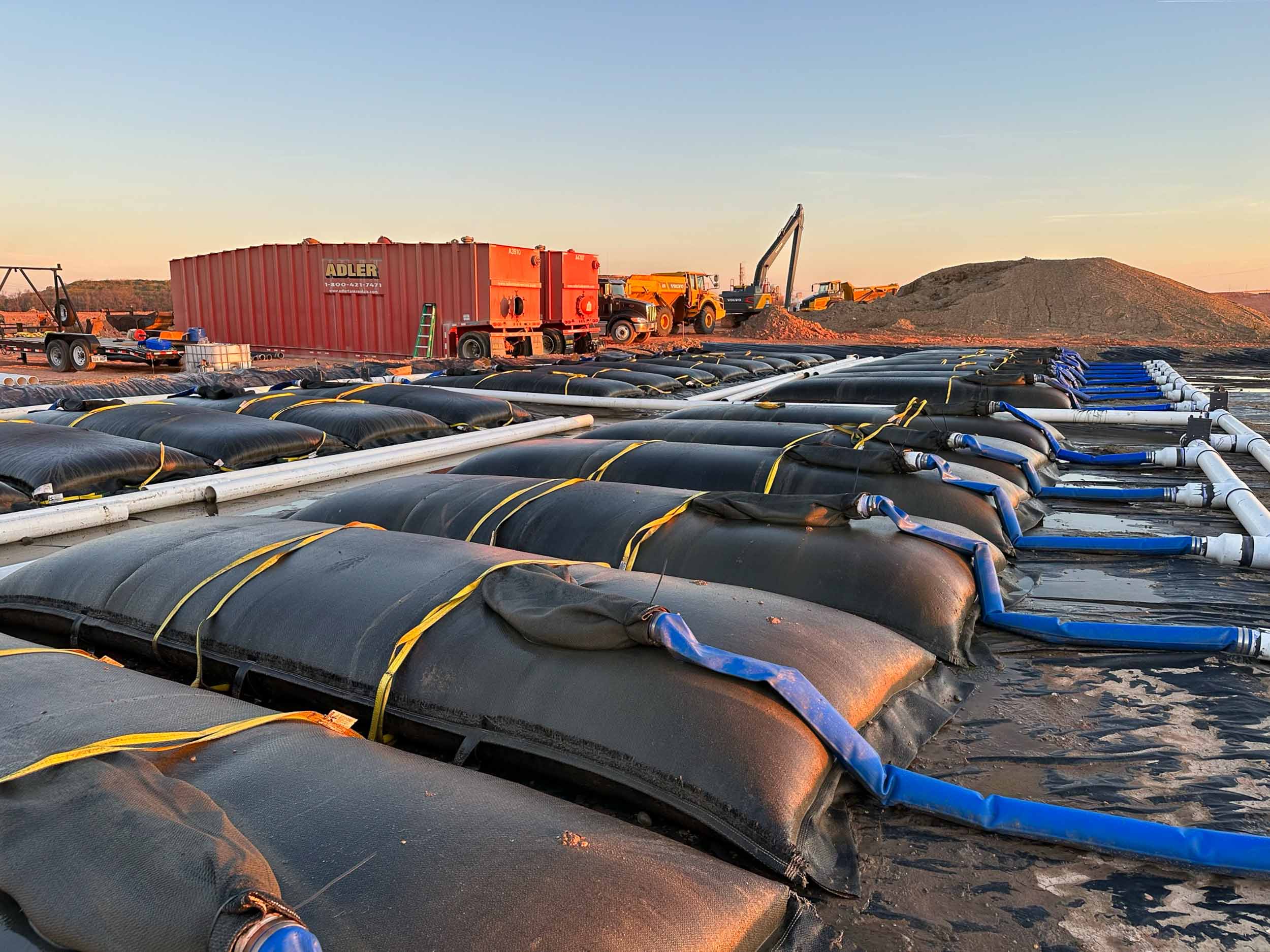
- Filling method: Hydraulic dredge or pump; passive dewatering — gravity and pressure differential
- Polymer conditioning: Flocculant selected for fill material chemistry
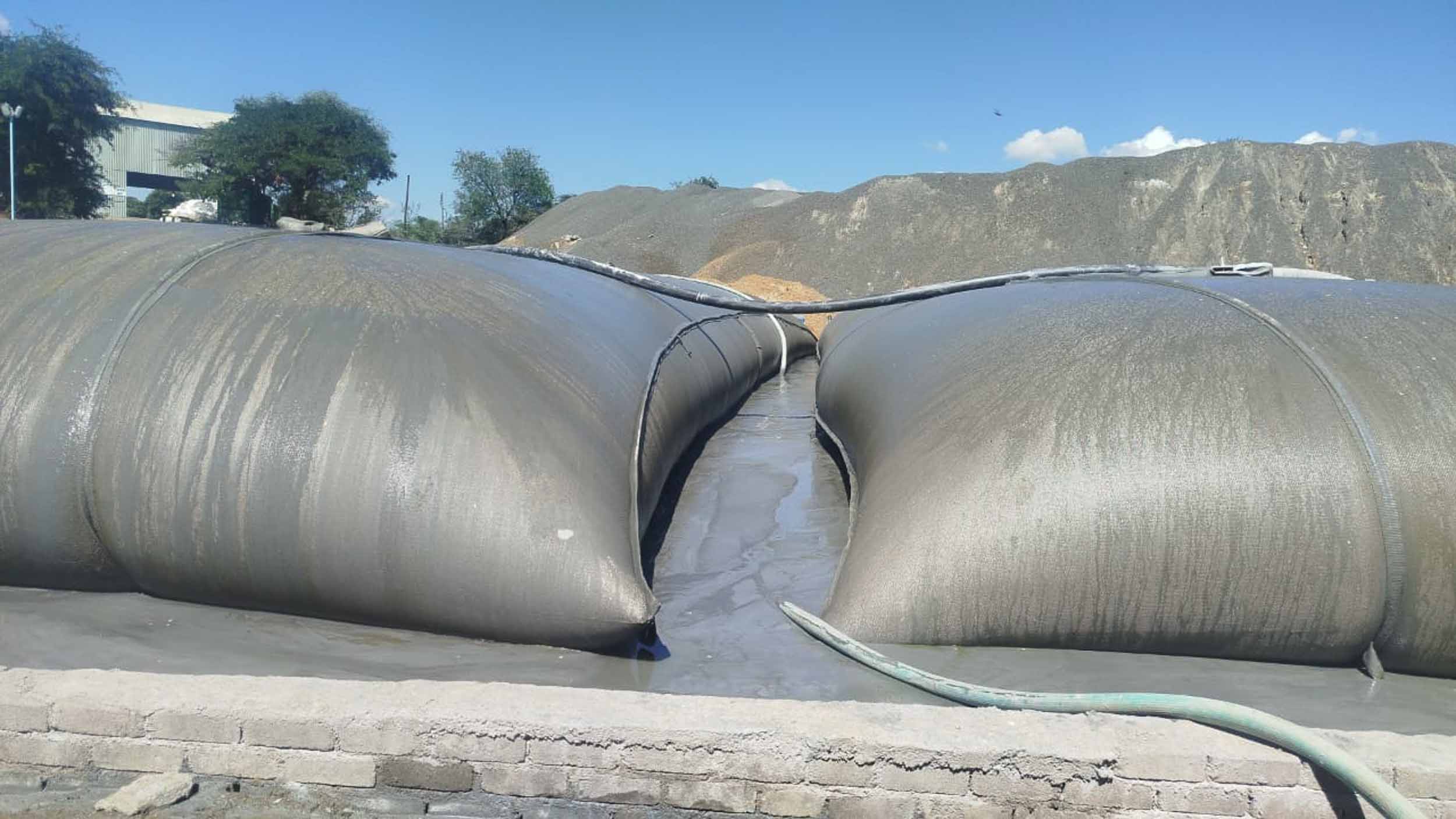
- Stacking: Up to 4 tiers verified in field conditions (HDPE-lined cells with high-capacity drainage)
- Storage: Tubes kept in original packaging, elevated and covered or in a warehouse sealed and stored in place for 2+ years
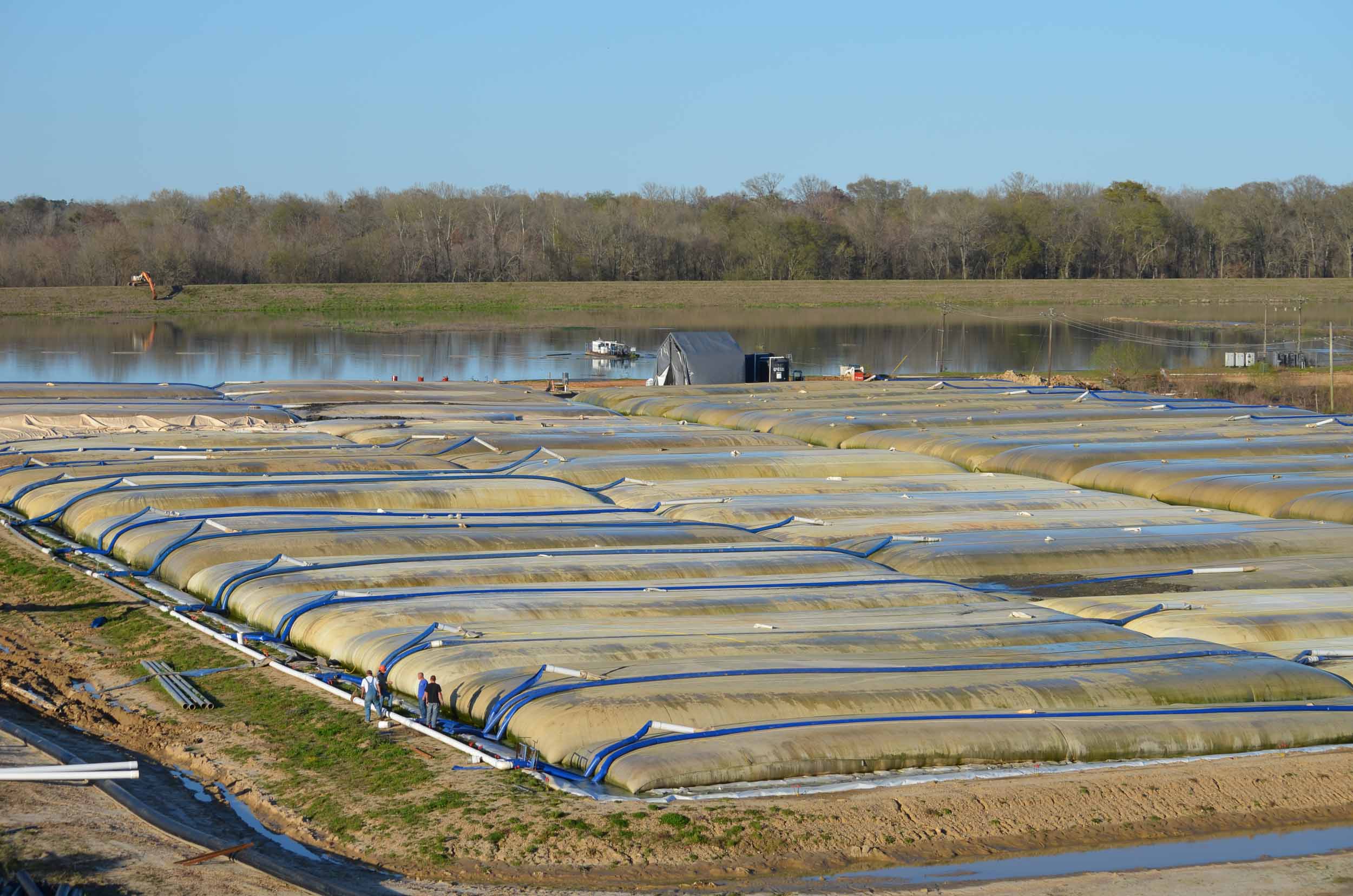
- Filtrate: ~85% of incoming flow rate cleared as clean filtrate (Savanna Street WWTP, Jackson MS)
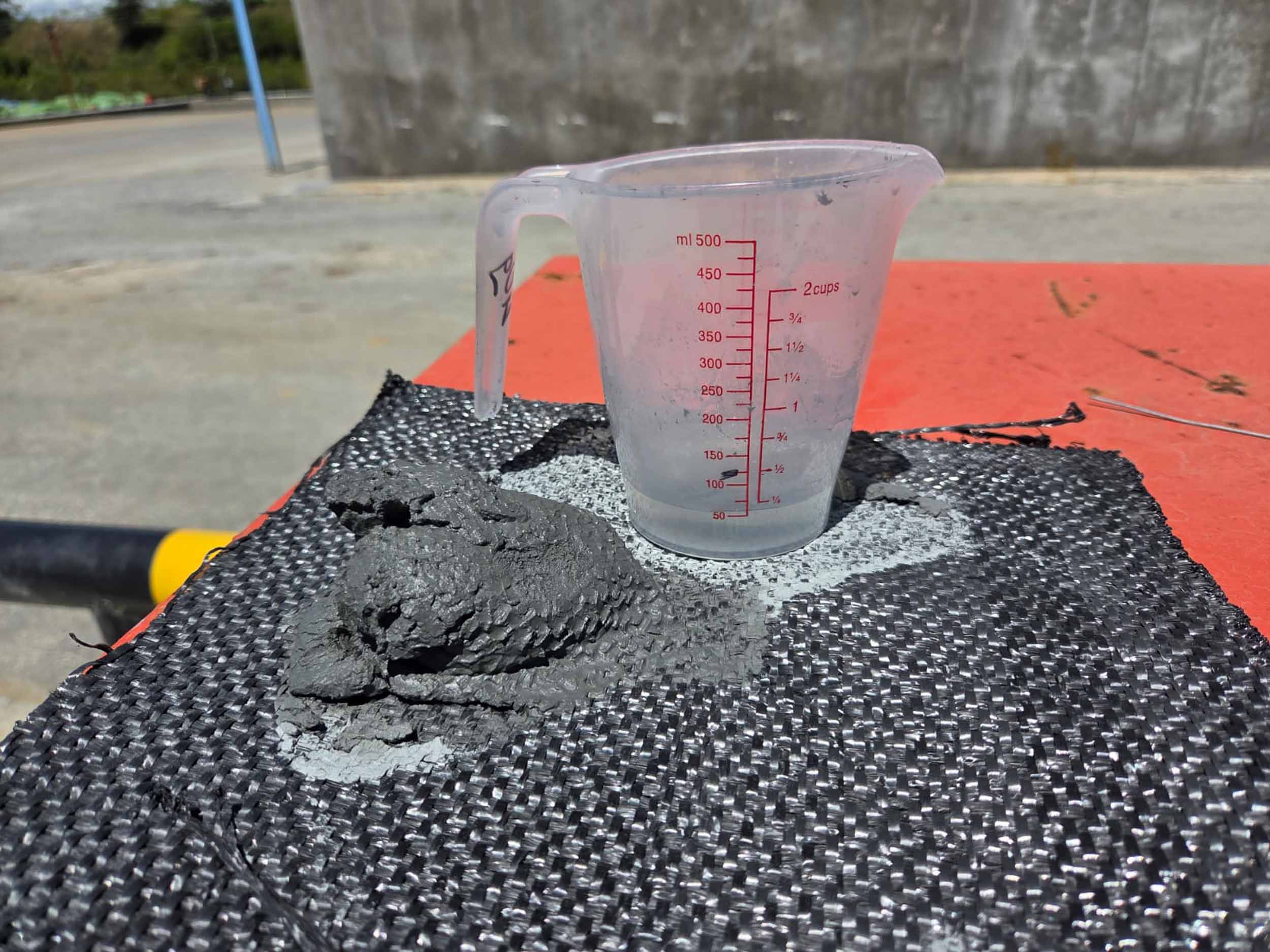
- Final solids: Municipal biosolids: 20–35% TS documented; >30% TS achieved in 30 days
- UV stability: Engineered for coastal and extended-exposure applications
- Support tools: PREDICTOR / CALCULATOR software · TITANTube® Dewatering Questionnaire · in-house lab testing
Capabilities
- High-volume continuous fill: 1,137 gpm documented at Savanna Street WWTP, Jackson, MS
- Reduces 14% in-situ solids to 30–40% range in 45 days (SE USA agricultural waste project)
- Four-tier stacking reduces site footprint on volume-intensive dewatering projects
- UV-stabilized grades for coastal and prolonged outdoor deployment
- Optimized tube operational strength
What Our Clients Say
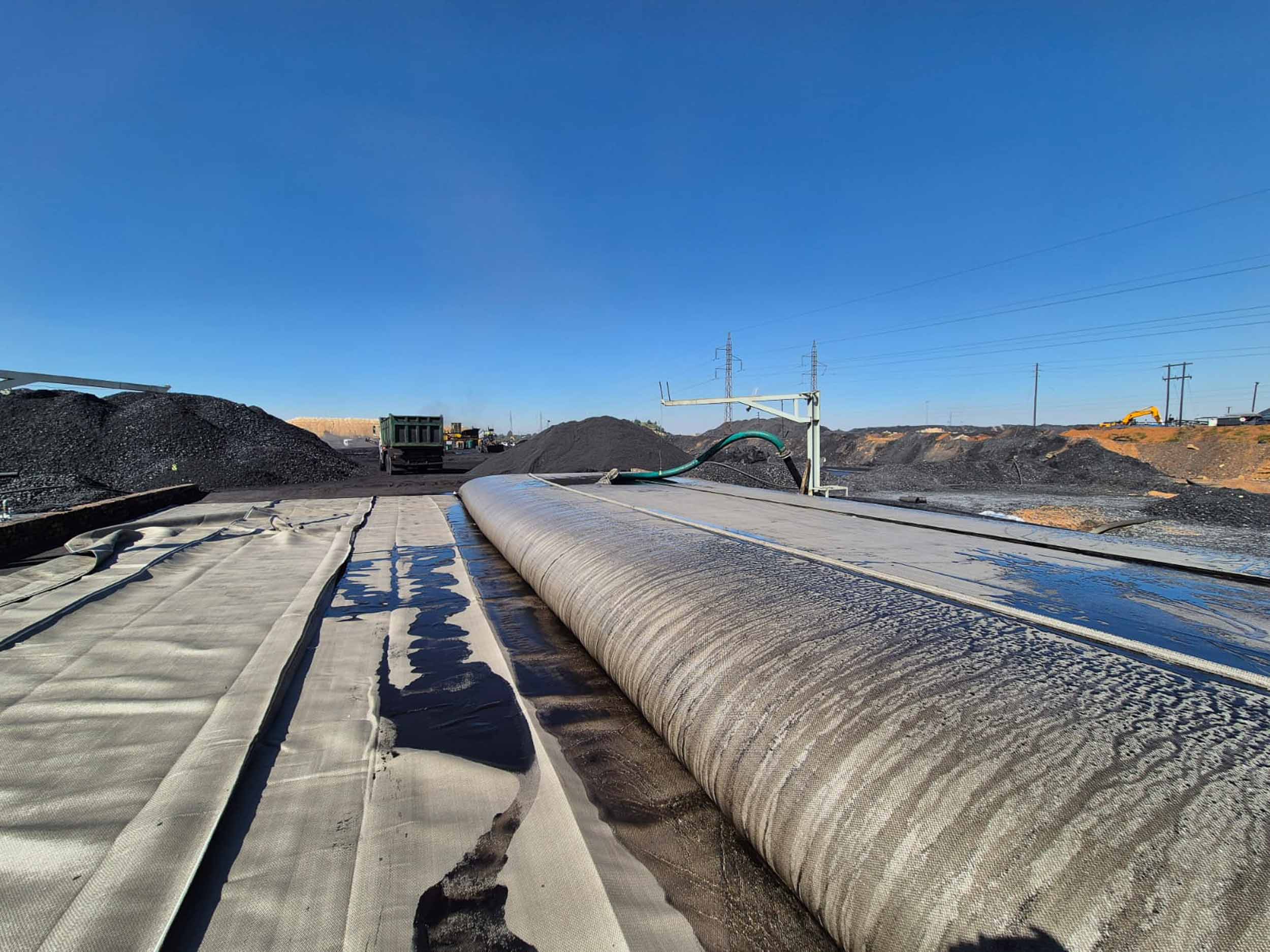
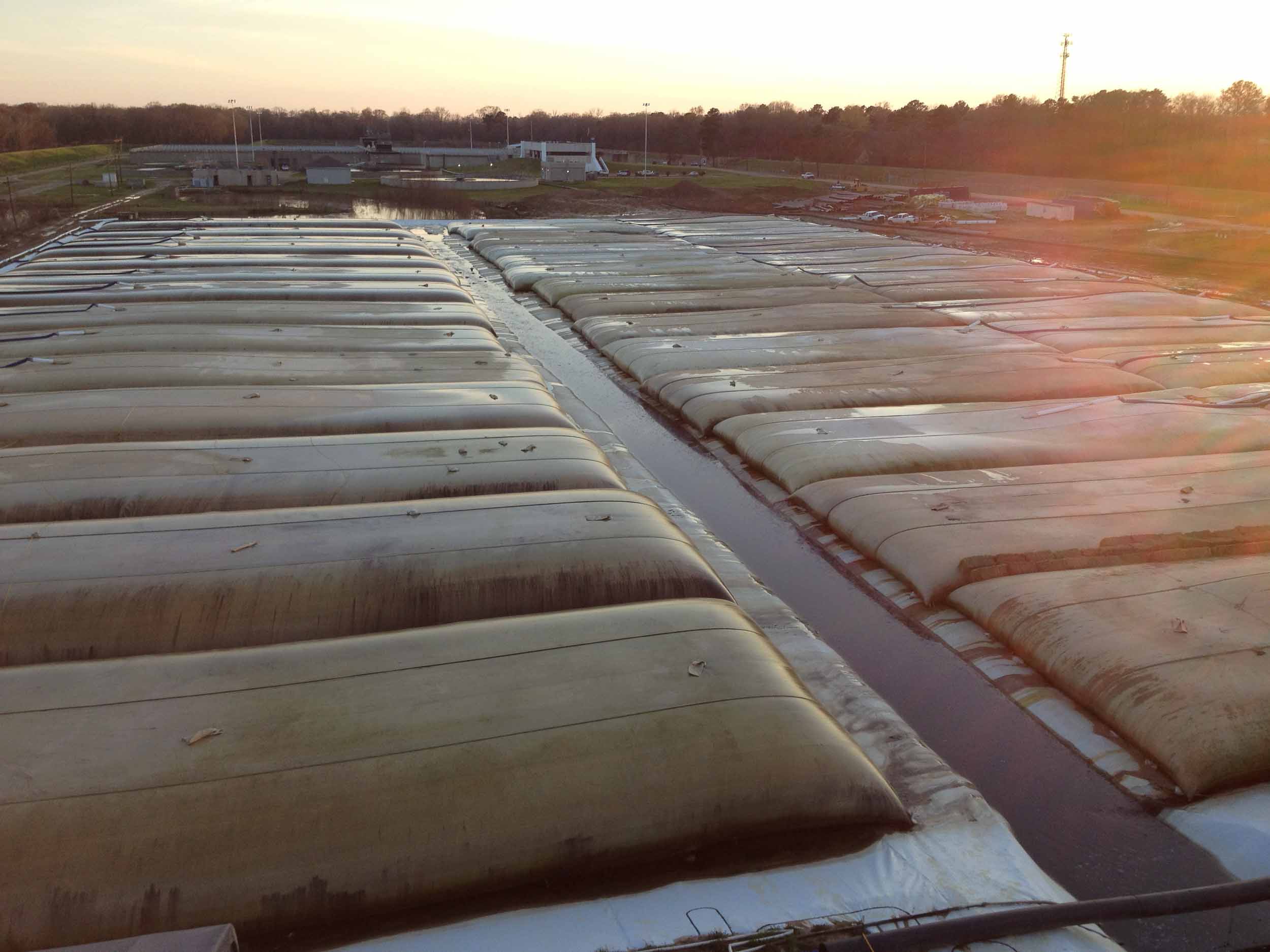
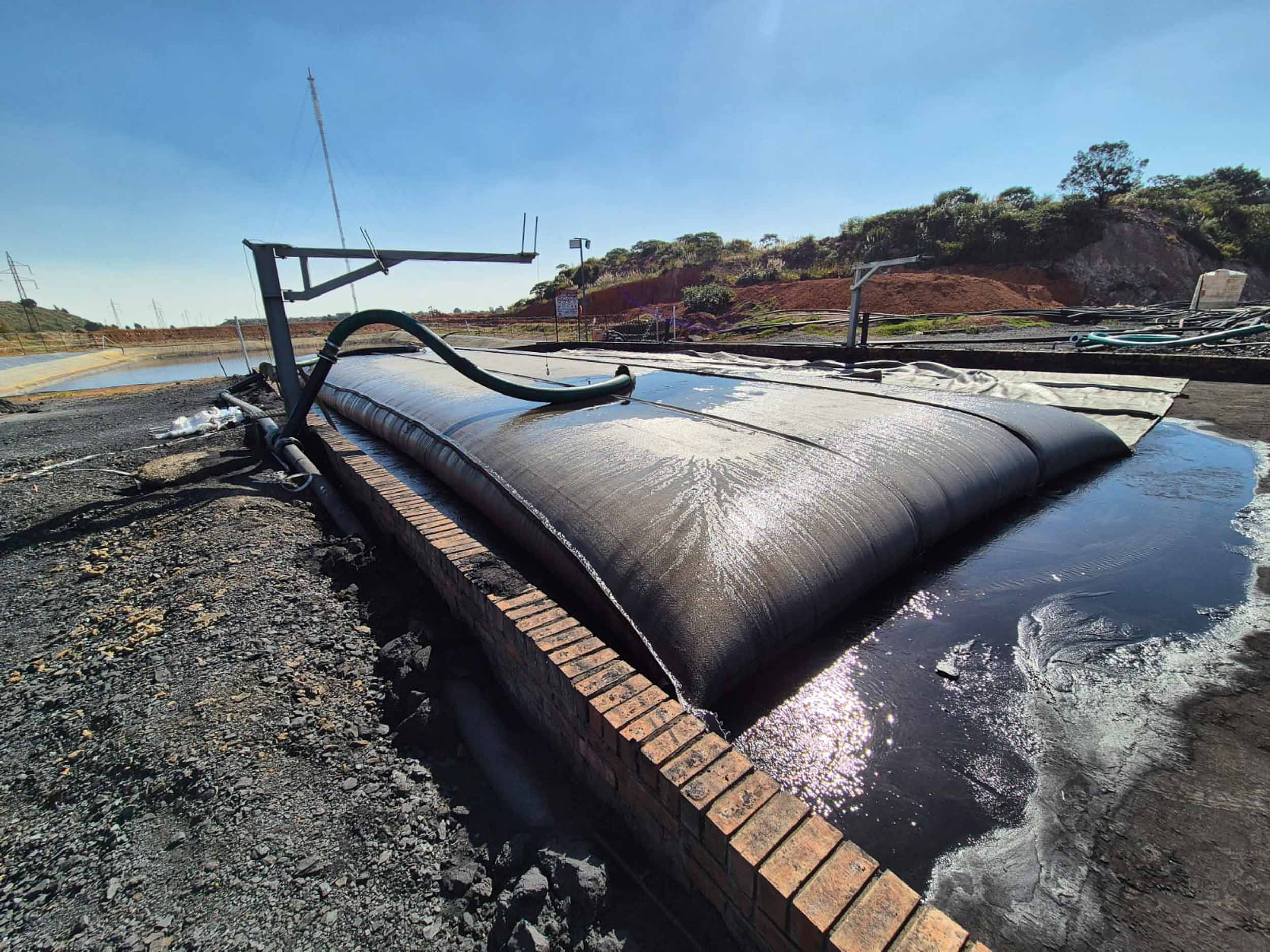
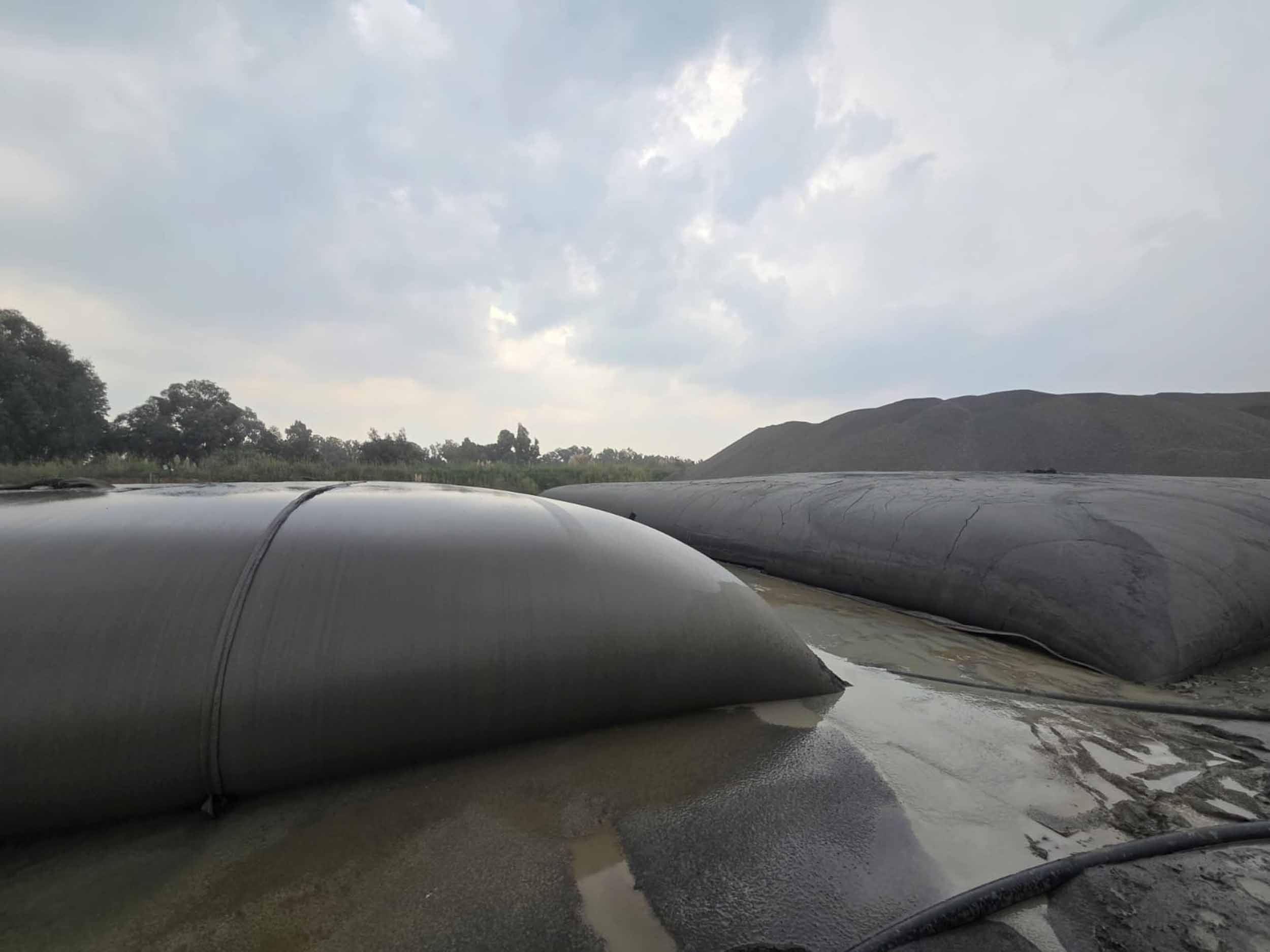
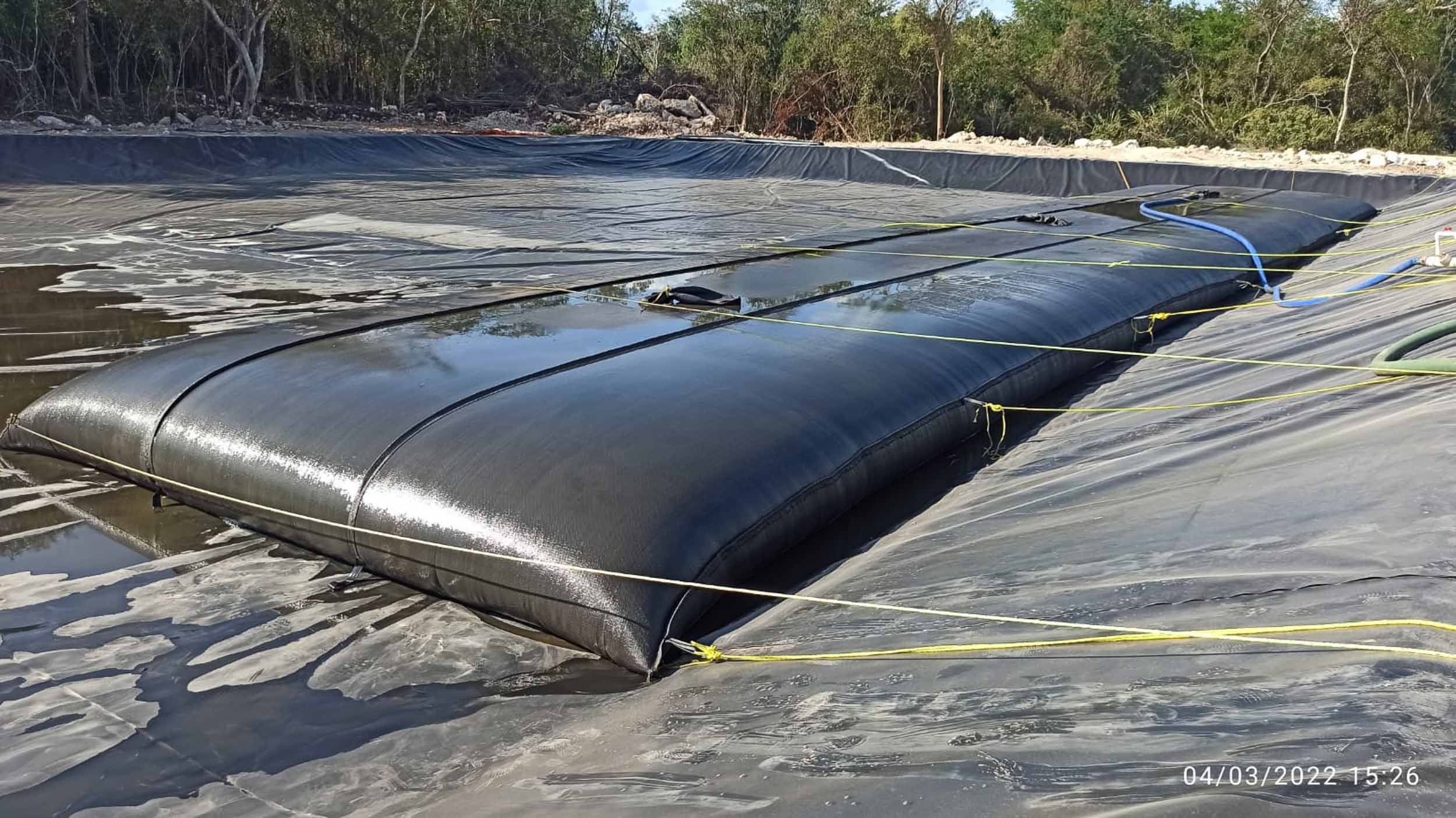
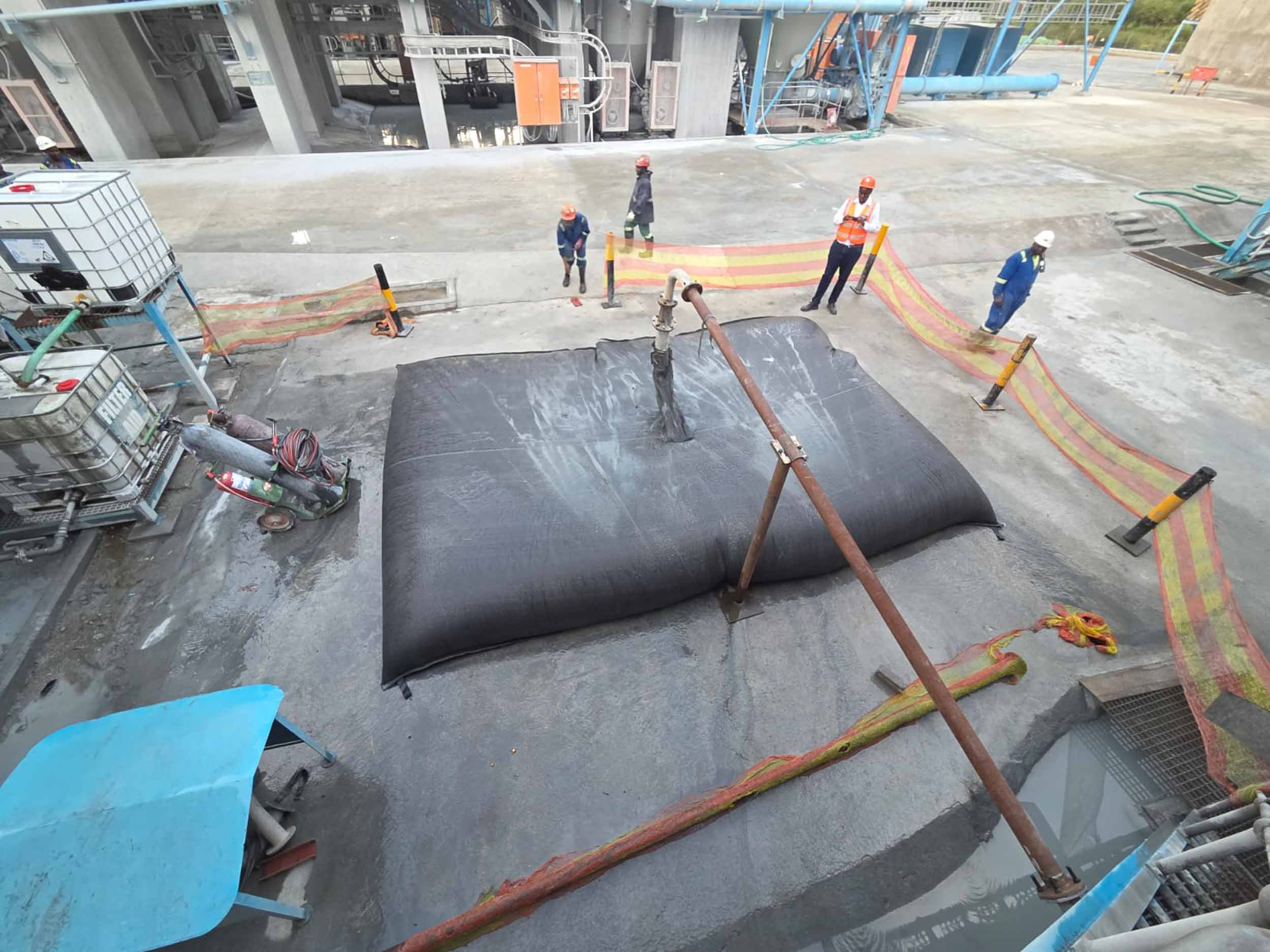
TITANTube® — In the Field
Frequently Asked Questions — TITANTube®
TITANTube® uses FTG’s Hi-Flo woven geotextile — developed specifically for maximum dewatering performance in sludge, biosolids, and mining tailings applications. At Savanna Street WWTP in Jackson, Mississippi, TITANTube® Hi-Flo geotextile tubes achieved >30% TS in 30 days using significantly fewer tubes than estimated, validating published research comparing high-flow woven geotextile to alternative fabrics. The high interface friction and exceptional tear resistance TITANTube® specialty fabrics support four-tier stacking.
TITANTube® Hi-Flo systems are stacked within HDPE-lined containment cells with high-capacity drainage pumps. Four stacking tiers have been safely achieved in documented field projects. FTG’s PREDICTOR software models tube geometry and stress under fill conditions to support the design of the stacking configuration — cell dimensions, liner specification, drainage capacity, and fill sequence are all part of the engineer’s design. Stacked tubes were stored safely for approximately two years at Savanna Street WWTP.
Polymer selection is project-specific and one of the most consequential decisions in a dewatering program. FTG’s technical team often works with your polymer supplier to evaluate fill material. The polymer supplier recommends polymer type (anionic, cationic, nonionic), molecular weight, and dose rate, while FTG uses the in-situ and final solids percentages to pair with other project information and recommend a TITANTube® configuration for your site. To better support our clients who send samples, FTG completes treatability screenings in our lab to estimate these parameters.
Yes. FTG has direct project experience with covered anaerobic lagoons — including a Southeastern USA project where one basin presented methane release risk during dredging. FTG’s operational protocols for these environments include methane management, specialized dredging approaches, and crew safety procedures. These conditions are identified during FTG’s pre-project questionnaire and addressed before mobilization.
TITANTube® systems are designed for long-term in-place storage. At Savanna Street WWTP, stacked tubes were stored safely for approximately two years — dewatering continued passively, and disposal timing stayed on the client’s schedule. TITANTube® OS435 geotextile is UV stabilized for extended outdoor exposure.