
Field-seamed high-strength woven geotextile — the proven path to safe, cost-effective lagoon closure.
What Our Clients Say
“We had great success capping a 60 acre process pond by reinforcing the sludge with FTG's geotextile. Unlike an earlier experience with another fabric and supplier, we had assistance from beginning to end from FTG, ensuring that the fabric had adequate strength, seams were sewn properly, and deployment was done correctly. We give the strongest recommendation to FTG.”
Environmental engineer, USA
What Our Clients Say
“We had great success capping a 60 acre process pond by reinforcing the sludge with FTG's geotextile. Unlike an earlier experience with another fabric and supplier, we had assistance from beginning to end from FTG, ensuring that the fabric had adequate strength, seams were sewn properly, and deployment was done correctly. We give the strongest recommendation to FTG.”
Environmental engineer, USA
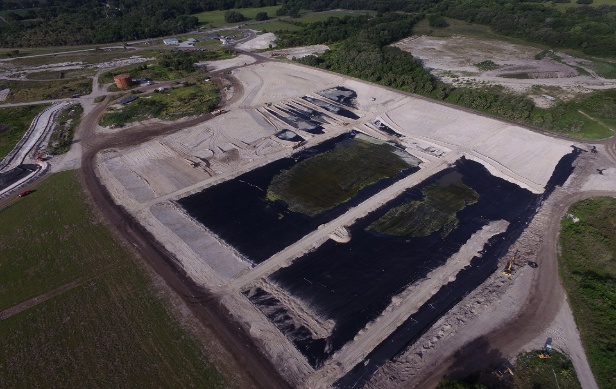
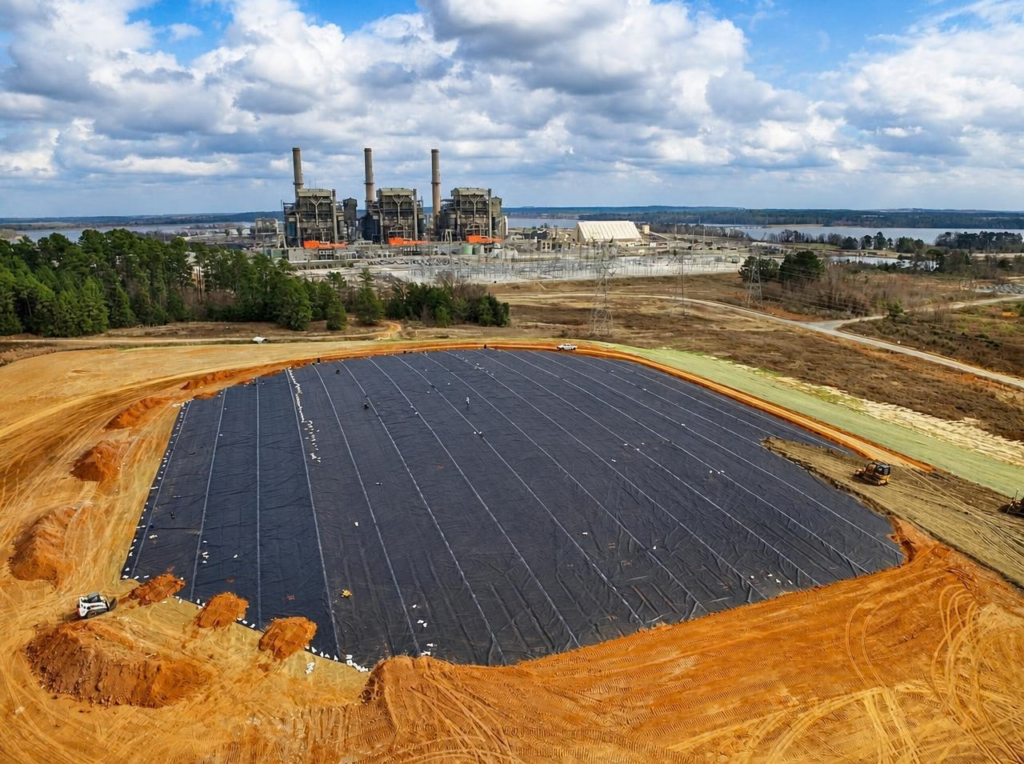
Sludge Lagoon Cap Reinforcement
Industries Served
Cost
Speed
Performance
Simplicity
There is no hard minimum, but the cost advantage over in-situ solidification becomes more pronounced as lagoon area increases. For smaller lagoons — under a few acres — the mobilization cost for field-seaming crews and equipment is a larger share of total project cost, but FTG fabricating custom panels and shipping to the site might be more compatible and cost efficient, and the economics are worth evaluating on a site-by-site basis. For lagoons of 10 acres or more, the cost differential is typically significant. FTG can provide a straightforward cost for any specific site.
This is exactly the application Flintex™ is designed for. The reinforcement layer does not require the sludge to have meaningful bearing capacity on its own — it functions as a bridging element, distributing the weight of the fill placed above it across a large enough surface area that the sludge can carry the load without displacing. FTG has deployed Flintex™ over sludge with extremely low vane shear strength, including sites where in-situ solidification was the only alternative being considered. The geotechnical data for the site (vane shear profiles, sludge depth, and surface extent) informs fabric grade selection, site specific recommendations and panel layout.
At minimum, FTG asks for vane shear strength data at representative locations across the lagoon, an estimate of sludge depth, and the overall surface area and closure timeline. If a geotechnical investigation has been performed, sharing the full report allows for a more precise fabric grade recommendation. FTG can work with preliminary data for early-stage feasibility evaluations and refine the specification as the site investigation matures.
The Flintex™ geotextile becomes a permanent component of the closed lagoon system. It remains in place as a tensile reinforcement layer and sludge separator beneath the cap fill, providing long-term structural stability and preventing sludge from migrating upward into the cap section. It is not removed or degraded — polypropylene woven geotextile has demonstrated long-term durability under this type of buried application.
FTG’s scope on lagoon closure projects is typically the geotextile supply and field seaming — furnishing Flintex™ to specification and constructing the reinforcement layer on site. The general contractor is responsible for deployment (if fabric is not seamed in place), anchorage, fill placement, site grading, and the broader closure construction scope. FTG works alongside the general contractor and the project’s environmental consultants to ensure the geotextile scope integrates cleanly with the overall closure plan.
Production rate depends on panel configuration, site access, and weather conditions, but FTG’s field seaming crews are experienced in sustaining high daily output on large-area projects. Multi-acre lagoons are routinely completed in a matter of days to weeks depending on total area and logistics. FTG will provide a realistic schedule estimate as part of the project evaluation and can coordinate mobilization timing with the general contractor’s fill placement schedule.

Free Consultation