
Turning what was once considered waste into the foundation of thriving coastal ecosystems.
Photo Credit: University of Florida
Wetland & Marsh Restoration
Supplying the Right Materials
Conceptual Design
Working with Consultants and Contractors
Environmentally Conscientious Solutions
Installation Feasibility
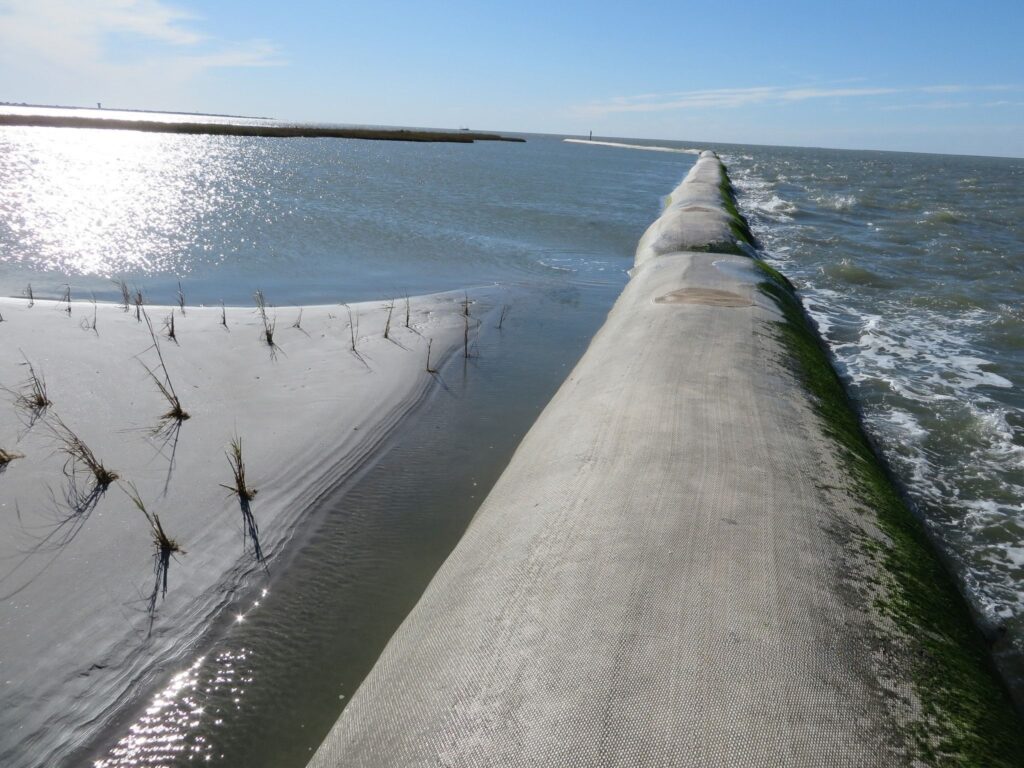
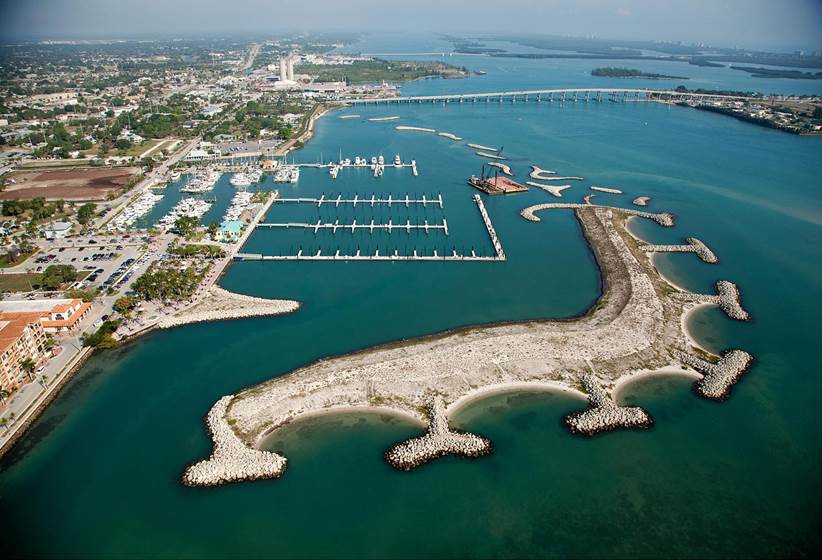
Most clean navigational dredge spoil — silts, sands, and fine-grained sediments removed from harbor and channel maintenance dredging — is suitable for beneficial use as fill in geotextile tube structures. The key requirements are that the material is hydraulically pumpable and that it meets the regulatory criteria for beneficial use at the project site. Contaminated sediments require additional evaluation and are subject to more restrictive regulatory review. FTG can help evaluate whether a specific dredge material is suitable based on its physical and chemical characteristics.
In many cases, beneficially using dredged material reduces the overall cost of both the dredging project and the restoration project simultaneously. The dredging contractor avoids or reduces upland disposal costs — which can be substantial — while the restoration project gains a fill material that is available on-site and already mobilized. The coordination required to align dredging and restoration schedules adds some complexity, but the cost offset is typically significant. FTG works with project teams to evaluate the logistics and cost implications early in the planning process.
Species selection is site-specific and is developed in coordination with the project’s ecological consultants and permitting agencies. Common species in FTG’s restoration projects include smooth cordgrass (Spartina alterniflora), black needlerush (Juncus roemerianus), mangroves in tropical and subtropical sites, and various dune and upper marsh species depending on site elevation and salinity. FTG does not prescribe species independent of the site’s ecology and regulatory context — the right species for one site may be inappropriate for another.
Initial establishment — root anchoring and visible new growth — typically occurs within one growing season under favorable conditions. Full canopy closure and the development of the dense root mat that provides mature marsh function generally takes two to five years, depending on species, planting density, site energy levels, and local climate. The geotextile infrastructure is critical during this window — it maintains the low-energy conditions the plants need to establish before they are capable of protecting themselves.
In many jurisdictions, yes — wetland creation or restoration projects that meet the applicable performance standards can generate mitigation credits under Section 404 of the Clean Water Act or equivalent state programs. The credit eligibility depends on the regulatory framework at the project location, the ecological outcomes demonstrated, and the long-term monitoring and management plan. FTG recommends engaging a wetland mitigation specialist or environmental attorney early in the planning process to evaluate credit potential for a specific project.
The earlier the better. Bringing FTG in during conceptual planning — before tube sizes, fill sources, or planting sequences are fixed — allows the system design to be optimized for the site rather than adapted to a design that was developed without fabrication and installation constraints in mind. FTG can participate in early feasibility discussions, provide rough-order-of-magnitude sizing and cost, and help identify whether a beneficial use approach is viable for the specific site before significant planning resources are invested.

Free Consultation